
Full disclosure: This post contains affiliate links. If you make a purchase through these links, 99signals may earn a commission at no additional cost to you.
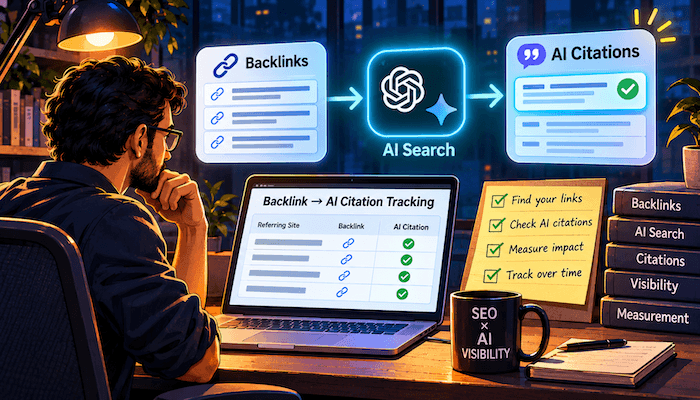
Link building teams are being asked a question most of them can’t answer yet: which of these placements actually got us cited in ChatGPT, Gemini, or Google’s AI Overviews?
uSERP’s State of Backlinks Report, published in September 2026, put a number on that gap. Of the 116 SEO professionals surveyed, 79.3% had been asked by a client or executive to make AI citations a KPI, and only 21.6% track them as a core KPI.
Another 51.7% track citations informally, which usually means someone pastes prompts into ChatGPT now and then. The rest don’t track them at all.
That leaves a lot of link building budgets justified by belief rather than evidence. This guide covers what the data actually says about links and AI citations, how to vet prospects for this new goal, and how to turn citations into something you can report.
What the State of Backlinks Survey Found
The survey skewed senior, with 47% of respondents at Director or Head of SEO level. Their answers show how quickly the criteria for a “good link” are changing.
Asked for the single deciding factor when vetting a link prospect, 58.6% chose topical relevance. Real organic traffic came second at 13.8%, AI citation frequency third at 12.1%, and domain authority scores last at 11.2%.
Belief in the link-to-AI connection runs high. 81.9% think backlinks influence whether AI engines cite a brand, 46.6% say they’ve seen before-and-after proof of a link becoming an AI citation, and 87.1% would keep building links even if Google stopped using them as a ranking signal.
Digital PR was voted the strongest tactic at 53.4%. Guest posting was voted the most overused, at 40.5%.
Two caveats are worth keeping in mind. These are practitioner beliefs rather than measured outcomes, and uSERP is a link building agency with an obvious interest in links staying valuable. That’s exactly why the measurement gap matters: an industry that mostly believes something, without most of it tracking that thing, is due for a reckoning.
How Links Actually Connect to AI Citations
The clearest picture of the mechanism comes from how AI assistants retrieve pages. Ahrefs analyzed 1.4 million ChatGPT prompts and found that 88% of the URLs ChatGPT cites come directly from its search index, and that it cites roughly half of the pages it retrieves.
In practical terms, a page generally has to rank to enter the pool ChatGPT picks from. Links help pages rank, so they influence AI citations indirectly, by helping pages get retrieved in the first place.
That points to something many link builders miss. The page hosting your mention is the one that gets retrieved and cited, so its rankings matter at least as much as the authority your link passes back to your own site.
The off-site data supports the same idea. An Ahrefs study of 75,000 brands found that branded web mentions correlated with AI Overview visibility at 0.664, compared with 0.326 for Domain Rating and 0.218 for backlink count.
A December 2025 follow-up across ChatGPT, AI Mode, and AI Overviews found YouTube mentions correlated even higher, at around 0.737. Ahrefs was clear that these are correlations rather than proof of cause, and large, well-known brands naturally score high on all of these signals at once.
Read together, the data suggests a useful working rule. A contextual brand mention on a page that ranks for your buyers’ questions is worth more for AI visibility than a link from a high-authority site that nobody visits.
Why Domain Rating Is the Wrong Filter for AI Citations
Domain Rating measures the strength of a site’s own backlink profile. It says nothing about whether the specific page carrying your link ranks, covers your topic, or ever gets retrieved by an AI assistant.
A site with a high DR and almost no organic traffic is one that search engines have chosen not to send people to. Pages on that site are unlikely to appear in the retrieval pool, which means a placement there may do very little for AI visibility however good the number looks in a client report.
The type of placement matters too. Muck Rack’s analysis of more than 25 million cited links across ChatGPT, Claude, and Gemini found that paid and advertorial content made up just 0.3% of citations, while earned media made up 84%.
That 84% figure needs context before it shapes your budget. As PR Daily pointed out, Muck Rack’s definition of earned media includes Wikipedia, academic research, government sources, and social platforms alongside journalism, and journalism by itself accounts for about 27% of citations.
The study also left out Google’s AI Overviews and AI Mode. So the solid takeaway is narrower than the headline: clearly paid placements barely register, while journalism is a meaningful slice rather than the majority.
Category matters as well. A smaller study by the agency DerivateX looked at 233 software recommendations from ChatGPT and found it cited the recommended tool’s own website only 11.6% of the time.
Independent and niche blogs plus vendor-published content made up 81.9% of the citations in that study, major media 8.8%, and review sites like G2 and Capterra almost none. Every cited page used a list structure, and 68% included a comparison table.
Those numbers differ sharply from Muck Rack’s, partly because they cover one engine and one category. That variation is the real lesson, since the sources AI trusts in your category may look nothing like the industry averages.
How to Vet Link Prospects for AI Visibility
Topical relevance and real traffic are the starting point, since that’s where the survey respondents landed. AI visibility adds a few checks on top.
Check relevance at the page level. A tech publication covering everything from smartphones to crypto is a weaker fit than a niche blog that writes only about your category. The page your mention lands on should be about the problem your buyers are asking AI to solve.
Confirm real organic traffic. Look at traffic to the site and, where you can, to the section or page type your placement would sit in. Steady traffic is a decent sign that search engines trust the site enough to surface its pages.
See whether similar pages already rank. If the site’s existing comparison or list posts rank for queries close to your buyer prompts, a new placement there has a realistic chance of entering the retrieval pool.
Check whether the site already gets cited. If a domain shows up as a source in AI answers for your category, it’s already in the pool the engines draw from. That’s a stronger signal than any authority score.
Look for spam signals. Heavy outbound linking, open “write for us” pages that accept any topic, and thin multi-niche content are common signs of a private blog network (PBN) or a link farm. These sites can look strong on authority metrics while carrying little real trust.
Favor contextual placements. A brand mention inside a comparison, roundup, or how-to section gives an AI something specific to cite. A link buried in an author bio or footer gives it almost nothing.
Skip labeled advertorials for AI goals. They may still serve other purposes, but with paid content at 0.3% of citations in Muck Rack’s data, they’re a poor bet for AI visibility.
How to Turn AI Citations Into a Reportable KPI
The teams in that 21.6% share one habit: they define what they’re measuring before a placement goes live. Here’s a workable process.
Define your buyer prompts first. Write 20 to 50 questions your buyers would actually ask an AI assistant, covering comparisons, use cases, and “best tool for” questions. These become the scoreboard for the whole campaign.
Record a baseline. For each prompt, note which sources are cited today, whether your brand is mentioned, and which competitors appear. Without a baseline, any later change is just an anecdote.
Log every placement. Track the live URL, the date it went live, and the prompts it’s meant to influence. That log is what turns “we believe the link worked” into a claim you can check.
Check citations and mentions separately. Over the following four to twelve weeks, watch whether your placement URLs show up as cited sources and whether your brand gets named. These two outcomes often move independently, as we covered in our piece on brand credibility in AI search.
Report the whole chain, misses included. The strongest renewal report shows placement, prompt, and citation together, and it’s honest about the placements that didn’t produce anything. Tracking a few prompts you didn’t target also helps show whether movement came from your work or from wider shifts.
Even with all of this, attribution stays correlational. A citation can appear for reasons unrelated to your placement, so present the data as evidence that builds over time rather than proof from a single result.
Where the Semrush AI Visibility Toolkit Fits
Most of that 51.7% tracking informally are running the process above by hand. It works for a pilot, and it falls apart the first time a client asks for a three-month trend line.
The Semrush AI Visibility Toolkit replaces the manual parts, and each piece lines up with a step in the process.
Prompt Tracking monitors your chosen buyer prompts daily across AI platforms, which gives you the baseline before a placement goes live. Its Sources view lists the cited pages and third-party domains behind each answer, so you can see whether a specific placement URL starts appearing as a source.
Citations reports show which URLs get cited, the grounding queries that trigger them, and citation counts by platform. That’s the before-and-after record the survey respondents claim to have seen but rarely produce systematically.
Visibility charts your AI presence over time against competitors. It gives client decks a trend line to replace the Domain Rating screenshots that leaders in the survey ranked last.
Brand Performance shows how prominently your brand appears in AI answers and in what context. It answers the question citation counts can’t, which is whether a placement actually got your name into the response.
Competitor Research surfaces the prompts and sources driving competitors’ visibility. The domains already cited for your rivals make a far better prospect list than any authority filter, since they’re proven to be in the retrieval pool.
For the vetting side,
The AI Visibility Toolkit costs $99 per month per domain on annual billing. That includes 25 custom prompts tracked daily, Brand Performance for one domain, mentions across ChatGPT, Google AI, Gemini, and Perplexity, competitor analysis, prompt research, and an AI readiness site audit.
Agencies tracking several clients will likely need more than 25 prompts per domain, so check the higher tiers before committing. The standalone toolkit doesn’t currently list a free trial, but the SEO + AI Search plans include AI visibility tracking and do offer one.
Explore the
Final Thoughts
Link building isn’t going anywhere, and 87.1% of the surveyed SEO leaders would keep at it even without a ranking benefit. What’s changing is the definition of a good link and the standard of proof clients expect.
The evidence so far points in a consistent direction. Pages that rank and get retrieved matter more than the authority score of the domain they sit on, contextual brand mentions matter more than bare links, and clearly paid placements barely register in AI answers at all.
Leadership demand is running well ahead of measurement right now. The teams that close that gap first, with buyer prompts defined, baselines recorded, and placements logged, will be the ones walking into renewal meetings with an answer.
Related Articles