

Full disclosure: This post contains affiliate links. If you make a purchase through these links, 99signals may earn a commission at no additional cost to you.
Google just made a business decision. And it has everything to do with your website becoming optional.
In January 2026, Google launched the Universal Commerce Protocol at the National Retail Federation conference. Two weeks later, the U.S. Patent Office granted Google patent US12536233B1, titled “AI-generated content page tailored to a specific user.” Together, these two moves sketch the outline of a future where Google doesn’t just send people to your website. It replaces your website. And handles the checkout. And keeps the customer relationship.
If you run any kind of online business that depends on Google traffic for revenue, what follows should concern you. Not in a panic-and-rewrite-everything way, but in a pay-attention-to-the-infrastructure-being-built-around-you way.
The Protocol: Google’s Checkout Is Already Live
Let’s start with what’s already happening, not what might happen.
The Universal Commerce Protocol is an open standard that lets AI agents execute full commerce transactions, from product discovery to checkout to post-purchase support, without the customer ever leaving Google’s surface. That means a shopper can search in AI Mode or Gemini, find your product, and buy it with Google Pay without your website loading a single pixel.
This isn’t a concept deck or a research paper. It’s live. Target, Walmart, Shopify, Etsy, Wayfair, Best Buy, Macy’s, and The Home Depot are among the 20+ partners already integrated. Stripe, Visa, Mastercard, American Express, Adyen, and PayPal are in the payments layer. Sundar Pichai demonstrated it on stage at NRF. The Merchant Center onboarding is rolling out in the U.S. right now.
The mechanics are worth understanding. When a shopper searches for a product in Google’s AI Mode, the UCP allows the merchant’s backend to communicate directly with Google’s AI surface. The merchant stays the “seller of record,” which sounds reassuring until you realize what you’re giving up in exchange: the click, the visit, the on-site experience, the first-party behavioral data, the remarketing pixel, and the ability to cross-sell on your own terms.
Google frames this as reducing “checkout friction” and “cart abandonment.” Which is true. It also reduces the customer’s awareness that they’re buying from you and not from Google.
The Patent: Google Scores Your Landing Page (And Can Replace It)
Now for the part that hasn’t shipped yet but should keep you up at night.
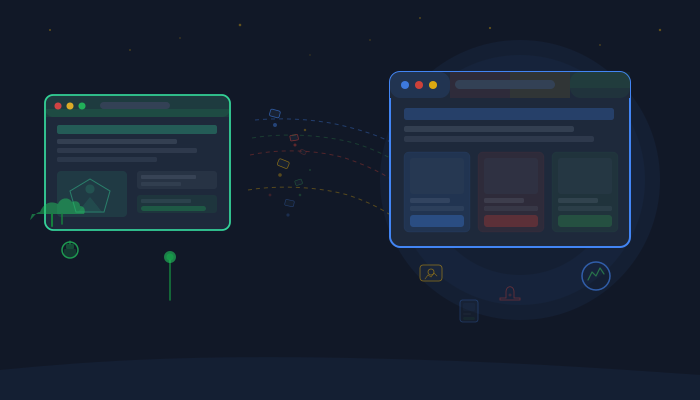
Patent US12536233B1 describes a system where Google calculates a “landing page score” based on conversion rate, bounce rate, click-through rate, and something it calls “page design quality.” If your page falls below a threshold Google sets, the system generates an AI-built replacement assembled in real time from your product data, the user’s search history, and their account context.
The user never sees your page. They see Google’s version of your page, styled to look like your brand (the patent specifies it mirrors your colors, logo, and navigation), but restructured with personalized headlines, suggested filters, product clusters, and, in some configurations, an embedded AI chatbot.
Here’s the detail buried in the patent claims that should make every marketer sit up straight: “In some instances, the navigation link can be included in a sponsored content item.” The patent does not specify who creates that sponsored unit, who approves it, or how it gets billed. The possibility that you could pay for clicks to a page you didn’t build is left conspicuously open.
A few important caveats. This is a patent, not a product launch. Google files thousands of patents, and many never become features. The system described here requires AI capabilities that may not be reliable at scale today. There is no announced timeline. But patents reveal strategic intent, and the intent here is unmistakable.
What This Actually Means for Marketers
Here’s where I diverge from the typical “the sky is falling” analysis you’ll find on SEO Twitter.
The honest read on this situation is layered, and the layer you care about depends on what kind of business you run.
If you’re in e-commerce, UCP is the immediate concern, not the patent. The protocol is real, it’s rolling out, and if your competitors integrate and you don’t, their products get a “Buy” button in AI Mode and yours don’t. The practical question isn’t whether to participate. It’s how fast you can get your Merchant Center feeds in order. Product feed quality just went from “important for Shopping ads” to “the make-or-break discipline for whether you exist in AI commerce at all.”
If you’re a content publisher or service business, the patent is the story to watch. You’re not selling products through Merchant Center, so UCP doesn’t directly apply. But the patent describes a system that could replace any underperforming landing page, not just product pages. If Google decides your service page doesn’t convert well enough, the infrastructure to replace it with an AI-generated version is being legally protected right now.
If you’re a brand marketer, the through-line connecting both developments is the same: Google is building a world where your brand exists at Google’s discretion, presented however Google’s models determine is most effective. The one thing AI can’t fabricate is genuine brand preference built through community, content, social presence, and direct relationships. That moat just got a lot more valuable.
How to Prepare for Google’s AI Landing Page Future
I’m not going to pretend there’s a five-step checklist that neutralizes a structural shift in how the internet’s largest traffic source operates. But there are things worth doing now.
1. Audit your landing page experience like Google will
The patent explicitly lists the scoring criteria: conversion rate, bounce rate, CTR, design quality, and whether your page has product filters. If your pages are slow, cluttered, hard to navigate, or missing basic functionality, you’re volunteering for replacement. This isn’t new advice, but the consequences of ignoring it just escalated.
2. Get your product feeds in order
If you sell anything online, your Merchant Center feed is about to become your primary storefront on Google’s AI surfaces. That means accurate pricing, complete product attributes, high-quality images, detailed descriptions, and the new conversational attributes Google is rolling out (answers to common product questions, compatible accessories, substitutes). Most e-commerce teams are underinvesting here.
3. Track your visibility across AI surfaces, not just traditional SERPs
When the purchase funnel moves onto Google’s AI Mode, you need to know whether your brand is being cited, surfaced, and recommended in those environments. Traditional rank tracking doesn’t capture this.
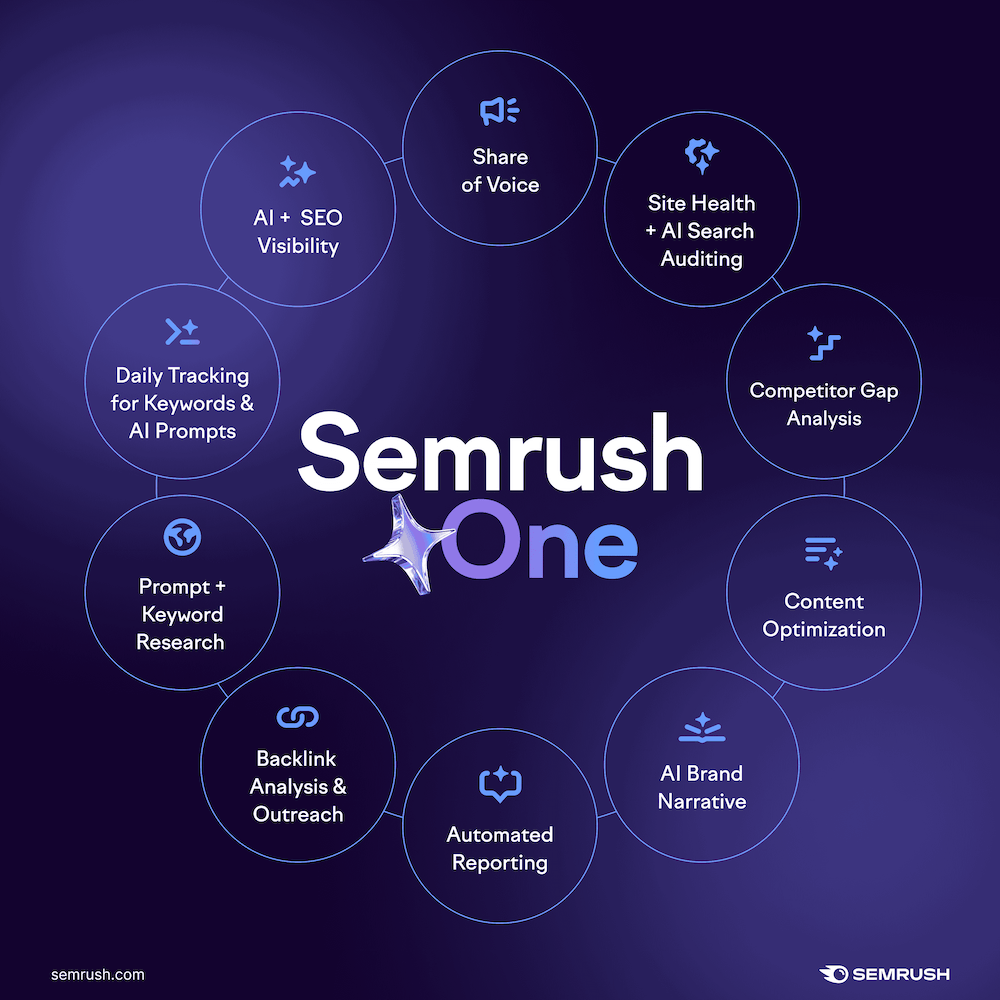
Tools like Semrush One are worth evaluating here, specifically because they bundle traditional position tracking with AI visibility reports across ChatGPT, Gemini, Google AI Overviews, and AI Mode, giving you a unified view of where your brand appears (and where it doesn’t) across both traditional and AI-driven discovery surfaces.
Full disclosure: The link above is an affiliate link, which means 99signals earns a commission if you sign up through it. This doesn’t cost you anything extra, and it doesn’t influence what I recommend. I’ve been covering
4. Invest in brand channels Google can’t intermediate
Email lists, direct traffic, community, social presence, podcasts, YouTube, owned audiences. Every visitor who knows your brand by name and comes to you directly is a visitor Google can’t reroute through its own AI-generated version of your site. The best defense against intermediation has always been the same: make people want you specifically, not just what you sell.
5. Watch the structured data layer
Google’s new Merchant Center attributes and the UCP integration requirements both lean heavily on structured data. Schema markup (Product, FAQ, HowTo) isn’t just for SEO anymore. It’s the language AI systems use to understand, extract, and correctly represent your business. If your structured data is incomplete or inaccurate, you’re giving AI surfaces permission to guess, and they’ll guess in whatever direction serves their own optimization targets.
The Bigger Picture
The pattern here isn’t subtle if you zoom out. Google AI Overviews reduce clicks to your site. AI Mode reduces them further. UCP eliminates the need for a click entirely. And now a patent protects the ability to replace whatever page the remaining clicks would have landed on.
Each step is individually reasonable from Google’s perspective. Users get faster answers, smoother checkouts, better-designed pages. But the cumulative effect is a systematic migration of the customer relationship from your property to Google’s.
The brands that thrive in this environment won’t be the ones trying to out-optimize Google’s AI. They’ll be the ones building enough direct demand that customers seek them out regardless of what sits between the search box and the checkout button.
Your website isn’t dead. But it’s no longer the only version of your business that customers might encounter. And the version Google builds might convert better than yours.
That’s the part that should really keep you up at night.
Related Articles